
Prop Firm Demo Accounts: Practice Free Before You Pay

Table of Contents
- 1. TradingView Paper Trading: The Foundation Every Trader Needs
- 2. MetaTrader 4/5 Demo Accounts: Industry-Standard Prop Firm Demo Account Practice
- 3. TradersYard Free Account Tools: Direct Challenge Preparation
- 4. FTMO Demo Account: Learning From Industry Leaders
- 5. Topstep Demo and Simulator: Futures Trading Specialization
- 6. NinjaTrader Free Simulation Account: Advanced Charting With Practice Execution
- 7. cTrader Demo Accounts: Modern Interface Alternative
- Comparing Top Prop Firm Demo Account Practice Platforms
- Maximizing Your Demo Account Practice Results
- Common Mistakes in Demo Account Practice
- Transitioning From Demo to Live Prop Firm Challenges
- How TradersYard Supports Your Practice Journey
- Real Trader Insights: Demo Practice Success Stories
- Advanced Demo Practice Techniques
- Frequently Asked Questions
For aspiring funded traders, the gap between theory and reality can be intimidating. You've read the books, watched the videos, and maybe even developed a strategy on paper. But when real money is on the line, even if it's a proprietary trading firm's capital, the pressure changes everything. This is precisely why prop firm demo account practice has become an essential stepping stone for traders looking to earn funding without risking their own capital or failing expensive evaluations.
The best proprietary trading firms understand this learning curve and offer demo accounts or practice environments that mirror their actual trading conditions. These platforms allow you to test strategies, familiarize yourself with trading platforms, and build the psychological resilience needed for live trading, all before putting any money at risk. In this comprehensive guide, we'll explore the top platforms offering prop firm demo account practice opportunities, what makes each one valuable, and how to maximize your preparation before attempting a funded challenge.
Whether you're completely new to prop trading or you've failed a challenge and want to refine your approach, the right demo practice can mean the difference between a costly failure and a successful path to funding. Let's examine the platforms that provide the most realistic, beneficial practice environments for serious traders.
1. TradingView Paper Trading: The Foundation Every Trader Needs
Before you even consider a prop firm challenge, you need to prove your strategy works in realistic market conditions. TradingView's paper trading functionality provides exactly that, a risk-free environment with real-time market data that mirrors actual trading conditions without the financial consequences. This platform has become the gold standard for traders who want to backtest strategies and develop discipline before risking any capital.
What sets TradingView apart from basic demo accounts is its sophisticated charting capabilities and community-driven insights. You're not just executing trades in a vacuum; you're analyzing markets with professional-grade tools that institutions use. The platform provides access to multiple asset classes, from forex and stocks to cryptocurrencies and futures, allowing you to determine which markets suit your trading style before committing to a prop firm specializing in those instruments.

The paper trading feature integrates seamlessly with TradingView's analytical tools, meaning you can draw trendlines, apply indicators, and execute trades all within the same interface. This continuity is crucial because it builds muscle memory, when you transition to a live prop firm challenge, the analytical process remains identical. According to TradingView's research, traders who spend at least 30 days in paper trading mode before going live show significantly better risk management and consistency.
Key benefits for prop firm preparation:
- Real-time market data across global exchanges
- Customizable account starting balance to match prop firm challenge sizes
- Full access to Pine Script for automated strategy testing
- Trade replay feature to practice historical market scenarios
- Community scripts and strategies to learn from successful traders
Pro Tip: Set your paper trading account balance to match the exact challenge size you plan to attempt. If you're targeting a $100,000 TradersYard challenge, practice with exactly that amount to understand position sizing at scale.
2. MetaTrader 4/5 Demo Accounts: Industry-Standard Prop Firm Demo Account Practice
Most proprietary trading firms that focus on forex and CFD trading utilize either MetaTrader 4 or MetaTrader 5 as their primary platform. This makes MT4/MT5 demo accounts perhaps the most directly applicable form of prop firm demo account practice available. When you practice on the same platform you'll use during your actual challenge, you eliminate technical learning curves and can focus entirely on strategy execution and risk management.
Opening a demo account through any major broker gives you access to a fully functional trading environment with customizable leverage, account balance, and trade execution settings. The beauty of MT4/MT5 demos is their universality, the platform operates identically whether you're using a demo account from one broker or live trading with a prop firm. This consistency allows you to develop workflows, test expert advisors (EAs), and refine your approach in an environment that's virtually identical to challenge conditions.
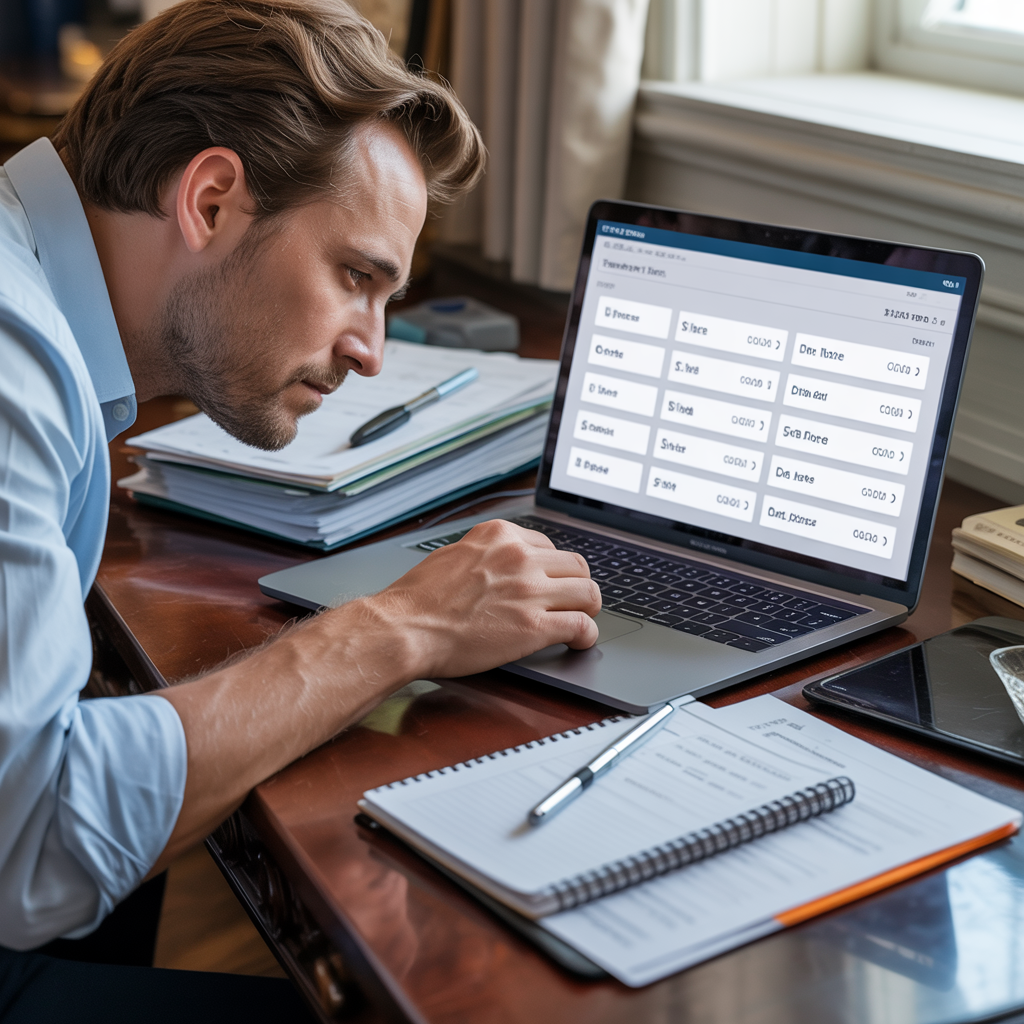
The MetaTrader platform also offers unparalleled customization through custom indicators and automated trading systems. If you plan to use algorithmic strategies during your prop firm challenge, the demo environment allows you to optimize your algorithms against live market data without financial risk. Many successful prop traders spend weeks or even months perfecting their MT4/MT5 workflows in demo mode before attempting their first evaluation.
What makes MT4/MT5 demos ideal for prop trading preparation:
- Identical interface to what most prop firms provide
- Full Expert Advisor (EA) and automated trading functionality
- Complete order type selection including pending orders and modifications
- Real spread conditions and typical slippage scenarios
- Mobile app synchronization for practicing trade management on-the-go
The platform's one-click trading feature is particularly valuable for scalpers and day traders who need to execute quickly during prop firm challenges. Practicing entry and exit execution speed in a demo environment helps you develop the reflexes needed when real evaluation capital is on the line.
3. TradersYard Free Account Tools: Direct Challenge Preparation
While many traders search for prop firm demo account practice on external platforms, we at TradersYard believe the best preparation comes from understanding the exact rules, platforms, and conditions you'll face during your evaluation. That's why we provide comprehensive resources and support tools that help you prepare specifically for our challenge structure before you commit financially.

Our approach focuses on transparency and education. Before you purchase a challenge, you can access detailed documentation about our trading rules, prohibited strategies, and platform requirements. This allows you to practice on your own demo accounts with our specific parameters in mind, maximum daily loss limits, overall drawdown rules, and profit targets that match our challenge structures. Rather than practicing with arbitrary goals, you can simulate the exact conditions you'll face.
What distinguishes our preparation approach is the emphasis on sustainable trading habits rather than short-term luck. Many traders fail prop firm challenges not because they lack trading skill, but because they don't understand the specific risk management requirements. By practicing with TradersYard's rules in mind, even on a standard broker demo account, you develop discipline around our 5% daily loss limit and 10% maximum drawdown before risking challenge fees.
How to prepare effectively for TradersYard challenges:
- Practice with identical risk parameters (5% daily loss, 10% max drawdown)
- Test your strategy across different market conditions and volatility levels
- Calculate position sizes based on our funding levels ($25K to $200K)
- Develop routines for tracking daily P&L against our specific limits
- Practice consistency by targeting our profit goals (8-10% depending on challenge type)
We also provide industry-leading support throughout your preparation journey. Our team can answer questions about challenge rules, clarify trading restrictions, and help you understand how your strategy fits within our evaluation framework, all before you start a paid challenge. This education-first approach gives you a significant advantage compared to firms that take your money first and explain the rules later.
4. FTMO Demo Account: Learning From Industry Leaders
FTMO has established itself as one of the most recognized names in proprietary trading, and their demo account access provides valuable insights into professional-grade prop firm evaluation standards. While you'll ultimately need to decide which firm best fits your goals, practicing on FTMO's platform helps you understand the elevated expectations and sophisticated risk management that successful prop traders must demonstrate.

FTMO's demo environment is particularly valuable because it includes the same trading platform integrations and dashboard analytics that their funded traders use. You can experience their comprehensive statistics tracking, which provides detailed breakdowns of your trading performance by time of day, currency pair, win rate, and risk-reward ratios. This level of analytical feedback helps identify weaknesses in your approach that might not be obvious from simply reviewing your trade history.
The company has also developed educational resources that complement their demo offering. According to research from Investopedia, firms that combine demo access with structured education produce traders with higher success rates. FTMO's webinars, trading psychology articles, and risk management guides provide context for what you should be practicing during your demo phase.
Key features of FTMO's demo experience:
- MetaTrader 4/5 integration with real market conditions
- Performance analytics dashboard showing detailed trade statistics
- Practice challenges that mirror actual evaluation structure
- Educational content specifically designed for prop trader development
- Community forums where traders share demo account experiences
One strategic approach is to use FTMO's demo to understand professional prop trading standards, then apply those lessons when preparing for your TradersYard challenge. This multi-platform practice gives you broader experience with different rule sets and evaluation criteria.
5. Topstep Demo and Simulator: Futures Trading Specialization
For traders interested in futures markets, Topstep offers specialized demo environments and simulators that focus specifically on futures trading dynamics. While TradersYard and many prop firms focus on forex and CFDs, understanding how futures prop firms structure their evaluations can broaden your overall trading education and reveal whether futures markets might better suit your style.
Topstep's trading simulator provides realistic order execution and market depth for major futures contracts including ES, NQ, CL, and GC. The platform simulates fill probability, slippage, and the queue-based execution that's unique to futures markets. This level of realism helps traders understand whether the leverage and volatility of futures contracts align with their risk tolerance before investing in a challenge.
What makes futures-focused demo practice valuable, even if you plan to trade forex with a different prop firm, is the discipline it instills around intraday risk management. Futures markets can move extremely quickly, and the tight daily loss limits that firms like Topstep enforce teach you to protect capital aggressively. These habits translate directly to forex prop trading, where similar discipline prevents account-ending drawdowns.
Why futures demo practice benefits all prop traders:
- Develops quick decision-making under high leverage conditions
- Teaches precise position sizing with per-contract profit/loss clarity
- Builds familiarity with limit orders and market depth concepts
- Reinforces strict daily loss limit adherence
- Provides exposure to different market structure and liquidity patterns
Even if you ultimately focus on forex trading, spending two weeks practicing futures strategies in a simulator can reveal whether you have the temperament for highly leveraged instruments and strict daily limits, both of which are common in prop firm evaluations.
6. NinjaTrader Free Simulation Account: Advanced Charting With Practice Execution
NinjaTrader offers a sophisticated free simulation account that combines professional-grade charting with realistic trade execution simulation. While primarily known in the futures trading community, NinjaTrader's simulation environment teaches valuable lessons about platform familiarity and analytical workflow that apply across all prop firm demo account practice scenarios.
The platform's strength lies in its customization capabilities and simulation accuracy. Unlike basic demo accounts that simply credit or debit your balance based on closing prices, NinjaTrader's simulation engine accounts for bid-ask spreads, order queue position, and realistic fill probabilities. This means your demo trading experience much more closely resembles what you'll encounter during an actual prop firm evaluation, where execution quality can significantly impact results.
NinjaTrader also excels in strategy automation and backtesting integration. You can develop a strategy, backtest it against years of historical data, then transition seamlessly into simulation mode to practice executing that same strategy in real-time market conditions. This workflow, from concept to backtest to simulation to live trading, mirrors the professional approach that consistently profitable prop traders employ.
Advantages for serious prop trading preparation:
- Market replay functionality to practice specific scenarios repeatedly
- Advanced order types and execution options
- Strategy analyzer for detailed performance metrics
- Simulation mode that accounts for realistic order fills
- Desktop and mobile applications for comprehensive practice
The market replay feature deserves special attention. It allows you to select any historical date and "replay" actual market data tick-by-tick, practicing your decision-making as if you were trading live. This capability is invaluable for building pattern recognition and testing how your strategy would perform during specific market events.
7. cTrader Demo Accounts: Modern Interface Alternative
While MetaTrader dominates the prop firm landscape, cTrader has gained significant traction among professional traders who prefer its more modern interface and advanced order execution capabilities. Several proprietary trading firms now offer cTrader as a platform option, making demo account practice on this platform increasingly relevant for prop trader preparation.
cTrader's clean, intuitive design reduces the learning curve compared to MetaTrader's sometimes cluttered interface. The platform provides excellent visualization of risk-reward ratios directly on charts, making it easier to maintain consistent trade management, a critical skill for passing prop firm evaluations. The ability to quickly assess position size based on risk percentage and see exactly where your stop loss and take profit levels sit can prevent the calculation errors that often lead to failed challenges.
The platform also offers sophisticated algorithmic trading capabilities through cAlgo, its algorithmic trading environment. If you're developing automated strategies for prop trading, cTrader's backtesting engine provides detailed analytics and optimization tools. The simulation environment allows you to test these algorithms with realistic spreads and execution conditions before deploying them in a live challenge.
cTrader demo advantages for prop traders:
- Intuitive position sizing based on risk percentage
- Level II pricing for better understanding of market depth
- Quick execution with pre-defined risk parameters
- Clean charting that reduces analytical overwhelm
- Built-in economic calendar and market sentiment tools
For traders who find MetaTrader's interface dated or confusing, spending practice time on cTrader demos can reveal whether this platform better suits your cognitive style, an important discovery to make before committing to a challenge.
Comparing Top Prop Firm Demo Account Practice Platforms
To help you choose the most appropriate practice environment for your needs, here's a detailed comparison of the platforms we've covered:
This comparison reveals an important truth: the "best" platform for prop firm demo account practice depends entirely on your current skill level, preferred markets, and specific firm requirements. Beginning traders benefit most from TradingView's educational ecosystem, while experienced traders preparing for a specific challenge need platform-identical practice on MT4/MT5 or cTrader.
Maximizing Your Demo Account Practice Results
Simply opening demo accounts isn't enough, you need a structured approach to ensure your practice translates into challenge success. The difference between traders who pass prop firm evaluations on their first attempt and those who fail repeatedly often comes down to how seriously they treat demo trading. Here's how to make your prop firm demo account practice truly effective.
First, treat every demo trade exactly as you would a real-money trade. This means following your trading plan rigidly, setting appropriate stop losses before entering positions, and maintaining a detailed trading journal. The psychological aspect of trading, discipline, patience, and emotional control, can only be developed through repetitive practice under realistic conditions. If you take shortcuts or "reset" your demo account whenever you hit drawdown, you're not actually preparing for the pressure of a live challenge.
Second, practice specifically for the evaluation criteria you'll face. If your target prop firm has a 5% daily loss limit and 10% maximum drawdown, program those exact parameters into your demo trading. Many platforms allow you to set alerts when you approach these thresholds. Use your practice period to develop an instinctive awareness of when you're approaching danger zones, this sixth sense can save your evaluation when emotions run high during live trading.
Third, practice across different market conditions. Don't just demo trade during high-volatility sessions when your strategy naturally performs well. Test your approach during low-liquidity periods, major news events, and overnight markets. Prop firm challenges don't pause for unfavorable conditions, you need strategies that protect capital even when markets don't cooperate with your preferred setup.
Essential demo practice disciplines:
- Maintain the same trading journal you'll use during live challenges
- Practice for at least 30 days before attempting a paid evaluation
- Test your strategy across different times of day and market conditions
- Calculate position sizes exactly as you will during the challenge
- Review every demo trade with the same intensity as real trades
- Set realistic daily and weekly profit targets that match challenge requirements
Reality Check: Most traders who fail prop firm challenges don't lack trading knowledge, they lack discipline. Demo practice is where you build the habits that become automatic under pressure.
Common Mistakes in Demo Account Practice
Understanding what not to do during your preparation is equally important as knowing best practices. Many traders develop bad habits during demo trading that guarantee failure when real evaluation capital is at stake. By recognizing these pitfalls, you can structure your prop firm demo account practice to actually prepare you for success rather than build false confidence.
The most damaging mistake is treating demo money as less real than actual capital. When you know you can simply reset the account or open another one, there's no consequence for overleveraging, ignoring stop losses, or revenge trading. These behaviors become habitual, and you'll unconsciously repeat them during your live challenge, often with disastrous results. Combat this by imposing artificial consequences: if you violate a rule during demo trading, force yourself to stop trading for 24 hours, just as you would if you'd failed a challenge.
Another common error is practicing for too short a period. A few days or even a week of demo trading isn't sufficient to encounter the various market conditions and psychological states you'll face during a 30-day or unlimited-time challenge. You need to experience winning streaks, losing streaks, choppy markets, trending markets, and everything in between. Only extended practice reveals whether your strategy actually has an edge or if you've simply experienced a lucky period.
Demo trading mistakes that lead to challenge failures:
- Resetting the account after losses instead of managing drawdown
- Only practicing during your "favorite" market conditions
- Using position sizes you wouldn't be comfortable with in a live challenge
- Skipping trade journaling because "it's just practice"
- Focusing on profits rather than process and rule adherence
- Not practicing the administrative aspects (screenshot requirements, etc.)
Perhaps the subtlest mistake is practicing with unrealistic expectations. If your demo trading shows 20% monthly returns, you might enter a prop challenge expecting similar results, then overtrade trying to achieve that number. Demo practice should establish realistic performance expectations based on your strategy's actual edge, helping you set appropriate profit targets for your evaluation.
Transitioning From Demo to Live Prop Firm Challenges
The psychological shift from demo trading to a live prop firm challenge is significant, even though you're still trading the firm's capital rather than your own money. The fear of losing the challenge fee, whether $200 or $600, creates emotional pressure that didn't exist during consequence-free practice. This is why experienced traders recommend a specific transition process rather than jumping directly from demo to challenge.
Consider starting with the smallest challenge size your target prop firm offers, even if you can afford larger. At TradersYard, this means beginning with our $25,000 challenge rather than immediately attempting the $200,000 option. The challenge fee is lower, but more importantly, the psychological weight is manageable. Success on a smaller account builds genuine confidence, not the false confidence that comes from demo profits, but real proof that you can perform under evaluation conditions.
Another effective transition strategy is to complete multiple consecutive profitable months on your demo account before purchasing a challenge. If you can demonstrate three consecutive months of profits while adhering to challenge rules on a demo account, you've proven both edge and consistency. This extended demo period might feel tedious, but it's far less expensive than failing multiple paid challenges because you rushed the transition.
Steps for transitioning successfully to live challenges:
- Achieve at least 2-3 consecutive profitable months in demo mode
- Review your demo trading journal to identify weaknesses
- Start with the smallest available challenge size
- Expect performance to temporarily decline due to psychological pressure
- Maintain identical processes and risk management from demo trading
- Accept that the transition period is part of your education
When you do make the leap, remember that your first challenge is itself part of the learning process. Very few traders pass their first attempt, not because their strategy is flawed, but because they underestimate the psychological adjustment. View your initial challenge as "advanced practice" rather than expecting immediate funding, and you'll make clearer decisions under pressure.
How TradersYard Supports Your Practice Journey
At TradersYard, we believe that trader success begins long before you purchase a challenge. That's why we've structured our entire firm around supporting your development journey, from initial demo practice through to consistent profitability as a funded trader. Our approach recognizes that prop firm demo account practice is just the beginning of a longer educational path.
We provide detailed challenge rules and risk parameters publicly so you can practice with our exact specifications before investing in an evaluation. Unlike firms that hide details until after purchase, we want you to know precisely what you're preparing for, 5% daily loss limits, 10% maximum drawdown, specific prohibited strategies, and exact profit targets. This transparency allows you to tailor your demo practice specifically to our challenges, dramatically improving your probability of success.
Our support team is also available to answer questions about challenge parameters, clarify rules, and help you understand how your trading style fits within our framework, all before you become a customer. This consultative approach means you can make an informed decision about whether TradersYard is the right fit for your goals and whether your current skill level justifies attempting a challenge or if you need more preparation time.
What makes TradersYard different for serious traders:
- No time limits on challenges (trade at your sustainable pace)
- 80% profit split (among the highest in the industry)
- Up to $200,000 in funding for successful traders
- Transparent rules available before purchase
- Responsive support throughout your journey
- Multiple challenge types (1-Step and 2-Step options)
When you're ready to transition from practice to evaluation, our challenge options offer flexibility to match your experience level and risk tolerance. The 1-Step Challenge provides faster funding for confident traders, while the 2-Step Challenge offers a more gradual evaluation process with slightly more forgiving drawdown rules during the initial phase.
Real Trader Insights: Demo Practice Success Stories
Understanding how successful funded traders approached their preparation can provide valuable modeling for your own journey. While every trader's path is unique, common patterns emerge among those who successfully transition from demo trading to funded accounts. These insights reveal that prop firm demo account practice isn't just about testing strategies, it's about building the complete trader psychology needed for long-term success.
One funded trader we work with spent three full months on demo accounts before attempting any challenges. During this period, he specifically practiced his emotional responses to losses, deliberately taking setups with lower probability during demo mode to experience multiple losing days. This counterintuitive approach taught him how his decision-making degraded after losses, knowledge that proved invaluable when he faced an inevitable losing streak during his evaluation. By having already experienced and worked through those emotions in a consequence-free environment, he maintained discipline when it mattered most.
Another trader used her demo period to test position sizing algorithms exhaustively. She wanted to trade multiple correlated pairs simultaneously, which required sophisticated risk calculations to avoid over-leveraging. By practicing these calculations daily on a demo account for two months, the math became automatic. During her live challenge, she could quickly calculate appropriate lot sizes for multiple positions without the hesitation and errors that cause many traders to violate drawdown limits.
Key lessons from successful traders:
- Extended demo practice (2-3 months) correlates with higher challenge pass rates
- Practicing emotional responses to losses is as important as testing strategy edge
- Developing automated workflows reduces cognitive load during live challenges
- Treating demo trading with full seriousness builds habits that persist under pressure
- Using demo time to optimize administrative processes (journaling, screenshots) prevents evaluation mistakes
These stories underscore an important reality: the traders who pass challenges aren't necessarily more talented or knowledgeable, they're simply better prepared. They've used their demo practice time to build complete trading systems, including the psychological and administrative components that less disciplined traders neglect.
Advanced Demo Practice Techniques
Once you've mastered basic demo trading and can consistently follow your rules, advanced practice techniques can further accelerate your preparation. These methods go beyond simple strategy testing to develop the sophisticated skills that separate consistently profitable prop traders from those who occasionally get lucky.
Market replay training is perhaps the most powerful advanced technique. Platforms like NinjaTrader allow you to select specific historical market conditions, high volatility events, news releases, trend days, range-bound sessions, and "replay" them at normal or accelerated speed. This allows you to practice the same scenario repeatedly until your responses become automatic. If you struggle with overtrading during choppy markets, you can replay several choppy days until you develop the discipline to wait for clear setups.
Simultaneous multi-account practice helps you develop consistency across different account sizes. Open demo accounts at $25,000, $50,000, $100,000, and $200,000, matching the challenge sizes you might eventually trade. Practice rotating between them to ensure your position sizing calculations and risk management remain accurate across different account scales. Many traders who pass a small challenge fail when scaling up because they haven't practiced the mental adjustments required for larger numbers.
Constraint-based practice intentionally adds limitations to make demo trading more difficult than your actual challenge will be. Practice with tighter daily loss limits (3% instead of 5%) or shorter time horizons (target the profit goal in 15 days instead of 30). When you then trade under actual challenge conditions, they feel easier by comparison. Elite athletes use this principle constantly, practicing under harder conditions than competitions require.
Advanced Tip: Record your screen during demo trading sessions and review the footage. You'll notice hesitations, emotional reactions, and decision-making patterns that aren't visible in the moment but significantly impact results.
These advanced techniques require more time and effort than basic demo trading, but they provide disproportionate returns. Traders who invest this extra preparation time often pass challenges on their first or second attempt, rather than the four or five attempts that less-prepared traders require.
Frequently Asked Questions
How long should I practice on demo accounts before attempting a prop firm challenge? +
Most successful traders recommend at least 30-60 days of consistent demo trading that mirrors your intended challenge conditions. However, the calendar time is less important than demonstrating consistency, you should be able to show at least two consecutive months of profitability while adhering to challenge rules before risking money on an evaluation. If you're still experiencing significant emotional reactions or rule violations during demo trading, you're not ready regardless of how long you've practiced.
Will demo trading performance accurately predict my results in a live prop firm challenge? +
Demo results typically represent your best-case performance because there's no psychological pressure. Most traders experience a 20-30% performance decline when transitioning to live challenges due to emotional factors. If you're barely profitable in demo mode, you'll likely struggle in live evaluations. Use demo trading to establish that you have a clear edge with disciplined risk management, then expect slightly degraded performance when you transition to challenges due to the psychological adjustment period.
Can I use demo accounts to practice for any prop firm, or do I need firm-specific demos? +
The most effective practice involves using the exact trading platform your target firm provides (usually MT4, MT5, or cTrader) and structuring your demo rules to match their specific challenge parameters. While general demo trading builds foundational skills, firm-specific preparation, understanding their exact drawdown limits, prohibited strategies, and profit targets, significantly improves pass rates. At TradersYard, we recommend practicing with our specific 5% daily loss limit and 10% maximum drawdown rules before attempting an evaluation.
What's the biggest mistake traders make during demo account practice? +
The most damaging mistake is treating demo money as "not real" and developing bad habits like overleveraging, ignoring stop losses, or revenge trading. These behaviors become
Start your challenge today
Get Started NowWhat a Prop Firm Demo Account Is, and Where to Actually Practise
A prop firm demo account is a simulated trading environment that mirrors a firm's challenge or funded conditions without real capital at risk. You get live or near-live market data, the firm's platform, and the same order types you'd trade for real, but the fills are simulated. In fact, at most modern prop firms the entire challenge runs on a demo account with virtual funds; the evaluation itself is the simulated environment. So "prop firm demo account," "practise account," and "demo funded account" usually describe the same thing from different angles.
One important nuance trips a lot of traders up: not every firm lets you practise before you buy a challenge. Some do; some don't. TradersYard, for example, does not offer a standalone pre-challenge paper-trading account, but it runs free Tournaments that give you an active, live account to trade in WebTrader at no cost, which is the practical way to test the platform and your strategy before committing to a challenge. Always check a specific firm's policy rather than assuming a free open-ended demo exists.
Why practising the rules matters more than practising the platform
In retail trading, a demo just teaches you the buttons. In prop trading, the simulated account is where you stress-test the rules that fail most traders: the daily loss limit, the maximum drawdown, the minimum trading days, and the consistency rule. Most people don't blow a challenge because their strategy is bad, they blow it on a drawdown rule they never internalised. Use practice time to answer concrete questions: where does your strategy sit against the drawdown? How many trades does it take to hit target without breaking consistency? Can you size so one bad trade never threatens the daily limit?
Your free practice options
- Platform-native demo: Trading platforms offer free simulated accounts with live data, the cheapest way to learn execution before any firm is involved.
- Free tournaments or trials: Some firms (TradersYard among them) run free tournaments that hand you a live practice account under real conditions, instead of an open-ended demo.
- Account resets after a fail: Not a demo exactly, but discounted retries let you re-attempt under the same real rules.
Futures practice accounts: what's different
Futures evaluations add tick value and contract sizing. Each tick carries a fixed dollar value, so position size translates directly into how fast you approach a daily loss limit. Treat a futures sim as your sizing lab, learn how many contracts your account and drawdown can support before you risk a funded account on it. The mechanics vary by instrument and firm, so verify the specifics on the firm's own platform rather than assuming they match another firm's.
However you practise, treat the demo like the real thing: same relative size, same loss limits, every session logged. The goal isn't a big simulated balance, it's proof you can stay inside the rules across dozens of sessions before you pay for the evaluation.
Funded Demo Account: What People Actually Mean
A funded demo account sounds like a contradiction. It isn't. It is how most of this industry actually works, and understanding it will save you from a common misconception.
Nearly every funded account in prop trading runs in a simulated environment. You trade demo capital, the firm tracks your performance, and successful trading may be mirrored by the firm with its own capital. The account is a demo. The payouts are real money in your bank account. That combination is what traders are really searching for when they type funded demo account.
So the question is never whether the account itself is a demo. It almost always is, at TradersYard and at most serious firms. The questions that matter: does the firm pay out reliably, how fast, and under what rules? At TradersYard the minimum payout is $50 and most requests are processed within 4 to 6 business hours once KYC is complete.
Keep the two ideas separate. A practice demo account, like the free platforms covered above, costs nothing and pays nothing. A funded demo account pays real money but sits behind an evaluation. One trains you. The other pays you. You want both, in that order.